
FWD 803 and 805 Trials
Every new hop product we develop starts with a practical question: What problem are we trying to solve for brewers?
What We Learned from the YCH 803 and YCH 805 FWD Trials
That problem might be aroma intensity, yield, process efficiency, or beer stability, to name just a few. But no product can be proven in theory alone. It has to be tested in working breweries, in established recipes, and ultimately, by actual beer drinking customers.
Launched by Yakima Chief Hops in partnership with Yakima Chief Ranches, the FWD innovation program was created to standardize brewer-led trials of experimental hop products and varieties in the advanced stages of development. Each year, FWD brings together a selected cohort of brewers to test new products and provide structured feedback that informs technical guidance, positioning, and future commercialization decisions. For 2025 cohort, 75 brewers were selected from a pool of nearly 400 applicants, reflecting strong industry interest in being active participants in the product development process.
The first FWD trial of 2025 focused on two advanced hop oil products: YCH 803 Trial and YCH 805 Trial. Both products are still under evaluation, and trial results do not necessarily indicate final commercial direction, but they demonstrate how YCH uses brewer feedback to evaluate new hop technologies before making commercial decisions.

How FWD turns brewer feedback into product insight
For this trial, participants selected either YCH 803 or YCH 805, then chose from Citra®, Simcoe®, or Mosaic® versions to fit their own brewing program. Brewers had flexibility in how they used the product, allowing the trial to capture a wide range of applications rather than a single controlled recipe.
Feedback came from product trial surveys, consumer feedback surveys, taproom customer preference testing, internal brewing trials, sensory panel evaluations, and chemical analytics. Together, these inputs gave YCH a clearer view of how each product performed in sensory impact, consumer response, and potential future use across global markets.
YCH 803: Precision dosing, process timing, and yield potential
YCH 803 is an essential oil fraction derived from supercritical CO₂ hop extract, intended for cold-side use and recommended to be used during early/active fermentation dry hopping.
It is <1% alpha and beta acids and does not contribute any bitterness. YCH 803 is highly concentrated and can be dosed at an approximately 1:200 ratio versus T-90. That means 10kg of T-90 would be roughly equivalent to 50g of YCH 803. Forty FWD members completed the YCH 803 product trial survey.
Brewer feedback pointed to several clear strengths. Participants consistently described YCH 803 as easy to integrate into existing workflows, especially within dry hop schedules, because the product could be dosed in such small values.
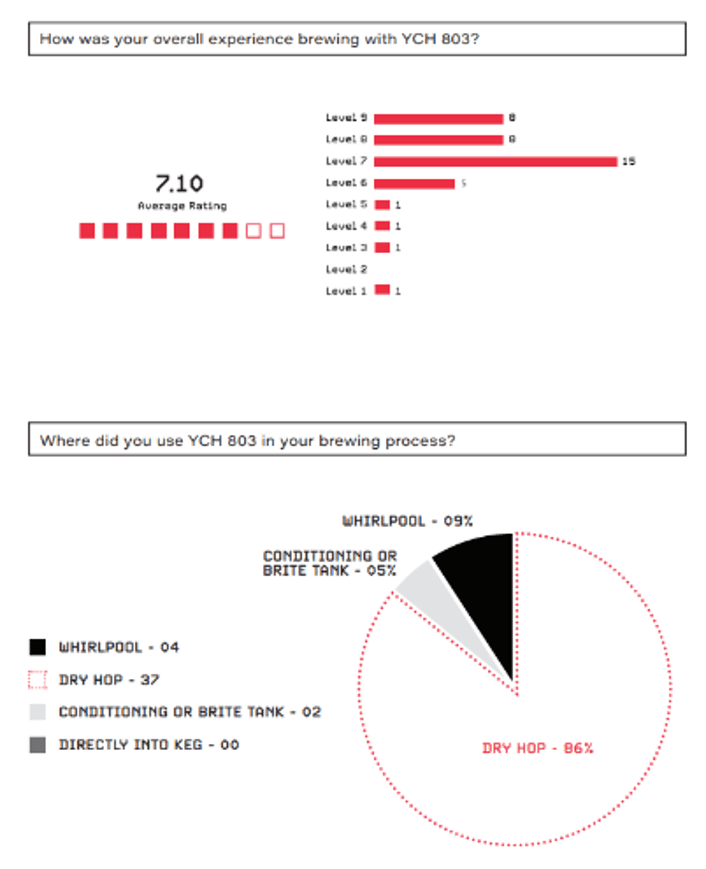
When asked what interested them most about using concentrated hop oil products, brewers most frequently cited improved yield and beer recovery, followed closely by enhanced hop aroma and flavor. Reduced hop creep, reduced vegetal impact, ease of use, consistency, and expanded applications such as hop water and low-alcohol beer also emerged as notable themes.
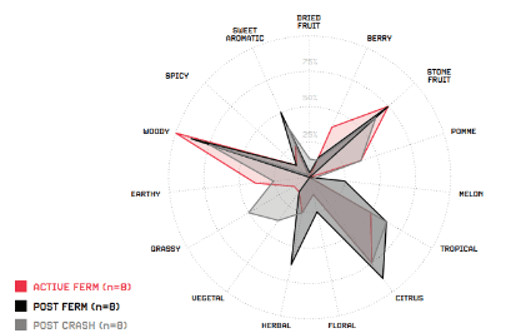
The sensory results showed that YCH 803 can create meaningful shifts in beer character, but also that timing matters. In internal trials with YCH 803 Trial Citra, active fermentation additions enhanced berry character, while post-fermentation additions elevated herbal and melon notes, and post-crash additions leaned more toward grapefruit and grassy attributes. These findings position YCH 803 as process-sensitive tool rather than a direct pellet replacement. Its impact depends on additions timing, dosage strategy, and how it is layered with traditional hop formats.
Some brewers saw strong promise in the product's ability to build flavor saturation and improve tank efficiency. Others questioned whether the proposed equivalency to T-90 pellets fully matched their sensory expectations. Those responses suggest YCH 803 may need especially clear guidance around dosage, timing, and equivalency to traditional hop formats.
YCH 805: Late-stage aroma adjustment and lighter-style potential
YCH 805 is fully beer-soluble emulsified hop oil formulated in propylene glycol and designed for post-fermentation dry hopping or brite tank dosing. In general, YCH 805 can be used at a ratio of roughly 1:10 compared to T-90 pellets. This means that 10kg of T-90 would be approximately equivalent to 1kg of YCH 805. Twenty-three FWD participants submitted YCH 805 product trial feedback.
Brewers praised YCH 805 for enhancing hop aroma without increasing vegetal load. Its beer-soluble format made it especially appealing for post-fermentation and packaging-stage use, where ease of integration and late-stage adjustment are important, especially in the context of hitting flavor specifications for flagship brands.
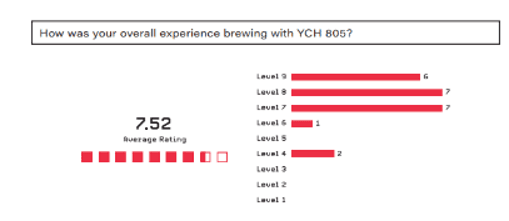
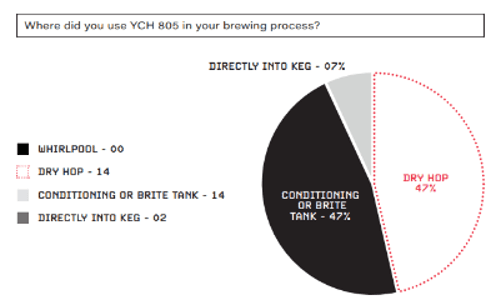
The most common use patterns included dry hop, conditioning tank, brite rank, and direct keg additions. Brewers tested YCH 805 in hazy IPAs, West Coast IPAs, pale ales, cold IPAs, lagers, low-ABV beers, and even non-alcoholic applications.
An internal dosage trail added important context. In hoppy lager, a lower dose of YCH 805 increased floral expression, with moderate lifts in berry and grapefruit-like citrus. A higher dose did not simply intensify those same traits. Instead, it shifted the profile toward melon rind, grassy, and earthy notes. The finding reinforces an important lesson from this trial: more is not always better. With emulsified advanced hop oil products, dosage strategy can shape the outcome as much as product selection.
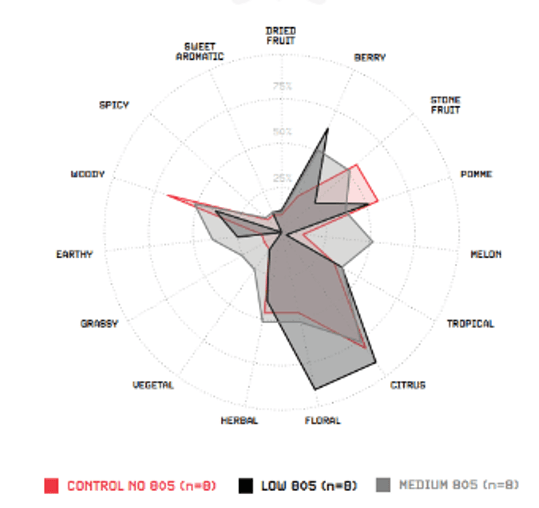
Brewers also reported some smoothing effects, light sweetness, and occasional slickness potentially associated with the propylene glycol emulsifier. For some, these attributes helped soften and balance the beer. For others, they introduced questions about mouthfeel, true-to-type hop expression, or ideal dosage rate. Those responses suggest that YCH 805 may be most compelling as finishing or adjustment tool, especially when used with careful attention to dose rate and beer style.
What consumers noticed
The FWD program also encourages brewers to report feedback from their consumers on the trail beers they produce.
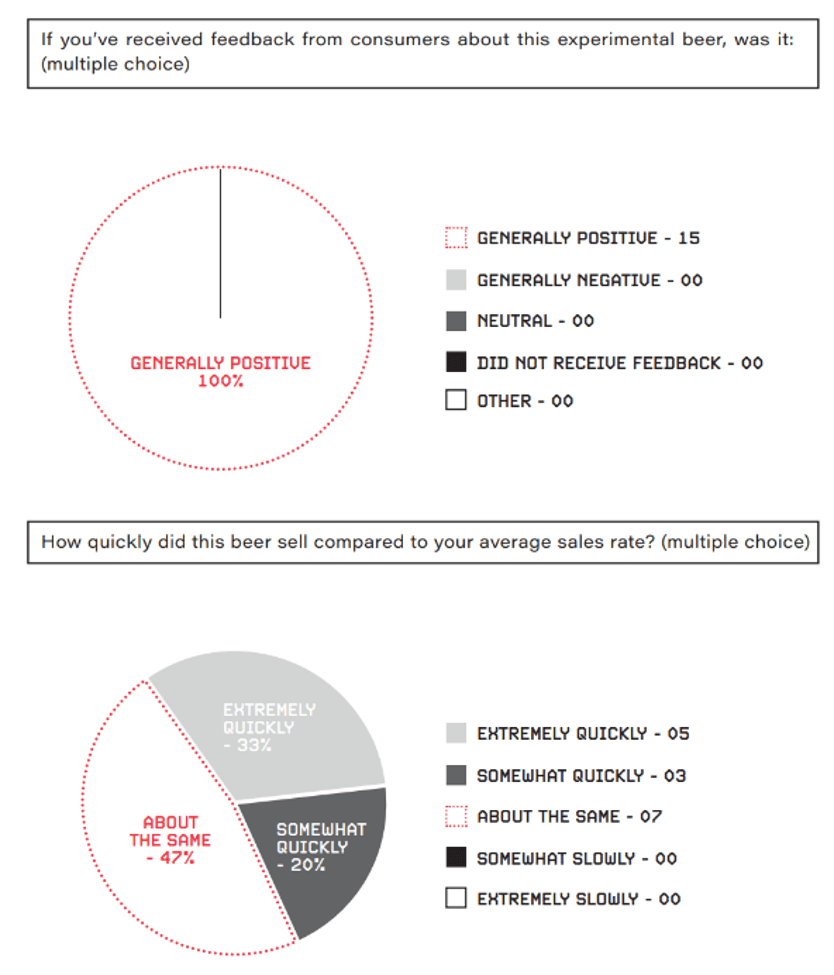
For YCH 803, consumer response was generally positive. Brewers reported that customers described trial beers as bright, aromatic, and distinctive. In many cases, the beers sold faster than typical releases or received strong praise for aroma intensity and drinkability.
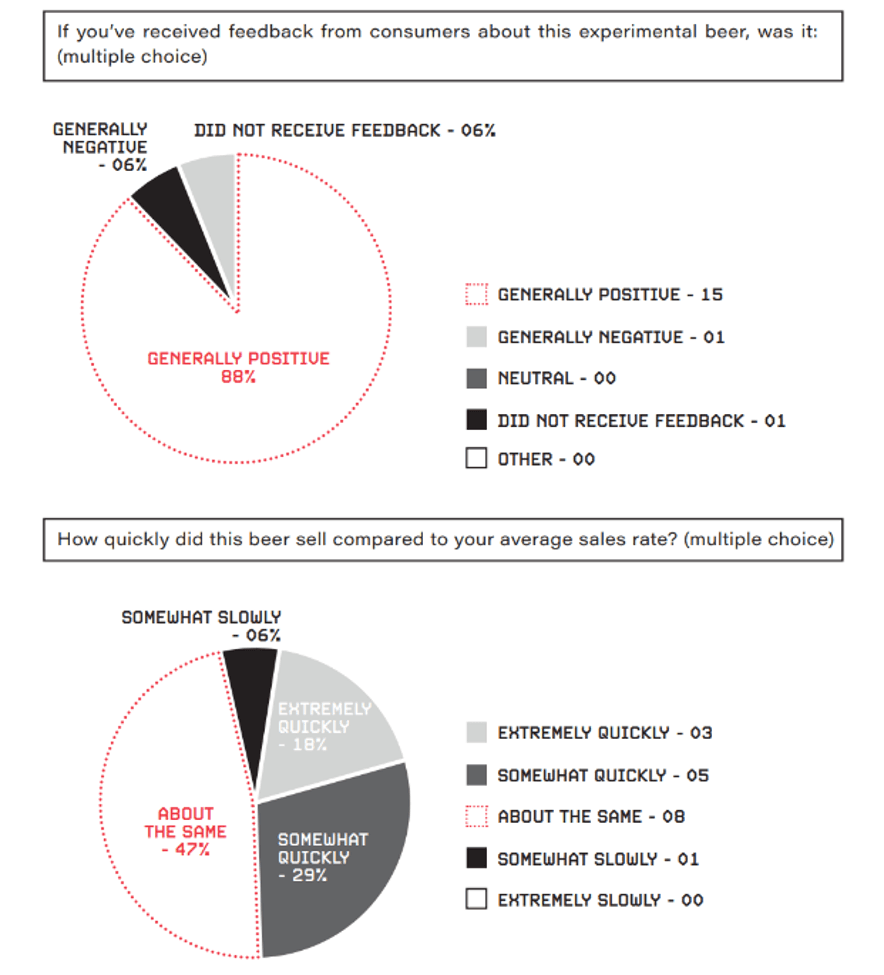
For YCH 805, consumer feedback was also strongly positive. Respondents described bright hop aroma, fresh citrus, floral character, and IPA-level aroma in lighter or more drinkable formats. One consumer preference test showed no statistically significant winner between control and trial beers, which is still valuable information. It suggests that these products may be effectively substituted for some percentage of traditional hop products in a recipe without significantly changing a consumer's perception of the product. This is powerful when consequential yield gains are possible.
What FWD reveals beyond the products themselves
Strong product development draws from multiple kinds of evidence. Brewer creativity, production-scale feedback, sensory analysis, consumer response, and honest discussion of limitations all help determine whether a product is useful beyond the trial bench. FWD makes that exchange both structured and repeatable.
Across both trials, brewers expressed interest in additional testing with different styles, varieties, timing strategies, and dosage rates. Many also reported limited familiarity with emulsified hop oils, sometimes mistakenly grouping non-emulsified products like HyperBoost™ or DynaBoost™ into the same mental category. That insight is just as valuable as any sensory score. It shows where education and technical guidance need to evolve alongside the changing landscape of modern hop products.
YCH approached product development as a collaborative, iterative process. Products are tested, questioned, refined, and better understood through the brewers who will eventually decide whether they belong in the brewhouse.
Moving beer forward, together
YCH 803 and YCH 805 remain trial products under evaluation. Whether either product ultimately moves toward commercialization will depend on continued technical review, brewer feedback, product performance, and market fit. But regardless of the final outcome, these trials inevitably moved the conversation forward.
That is the purpose of FWD. We push boundaries, collect meaningful data, and share those learnings with the brewing community as a whole.
Applications for the FWD Program open each December. Brewers interested in testing future hop products and experimental varieties are encouraged to watch for application announcements and consider joining the next cohort.